
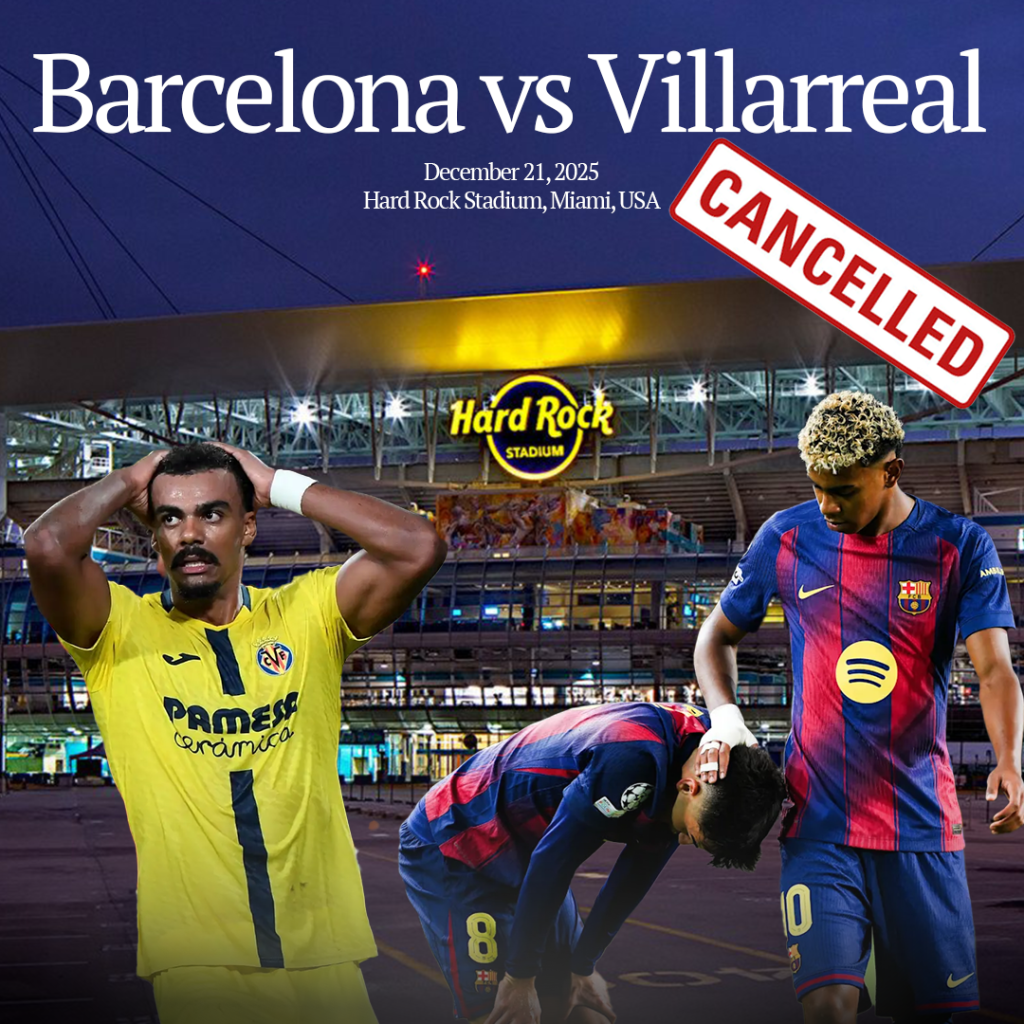
At the beginning of October, LaLiga announced that Barcelona would play Villarreal in Miami on December 21, in the first Spanish domestic league game played abroad. However, this Tuesday, October 21, the Spanish league announced the game would not be played in the Magic City, “due to the uncertainty that has arisen in Spain over the past few weeks”.
In the same statement released on the official LaLiga website, the Spanish league defended the importance of the project, stating how the league competes with the Premier League and the Champions League for reach and viewership. Furthermore, the statement outlines how the project “fully complie[s] with all federative regulations” and that it “[does] not affect the integrity of the competition”.
Despite a very negative and public reception of the project by fans, players and clubs, there is still much uncertainty surrounding the exact reason why the game was called off and whether or not it will play out. The backlash received both domestically and abroad does not only directly oppose the game, but rather the way in which the situation has played out.
Following the announcement, LaLiga received widespread criticism from players, teams and federations alike. One of the main criticisms was how the game wiped out any homefield advantage, limited recovery for an already airtight schedule and criticized LaLiga’s lack of transparency and communication.
Barcelona midfielder Frenkie de Jong was one of the first players to speak out against the game.
“I can understand the clubs financially, they will of course profit from it, and they can spread their brand further across the world. But I wouldn’t do it,” De Jong said. “It’s not good for the players. You have to travel a lot. It’s also not fair in terms of competition. For us, it’s now an away match on neutral ground. I totally understand if other clubs aren’t happy about that.”
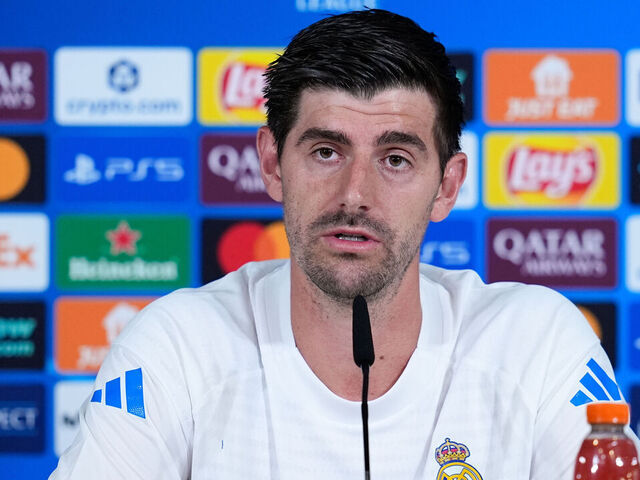
De Jong was not the only LaLiga player to oppose. Real Madrid goalkeeper Thibaut Courtois described it as a game that “totally affects the integrity of the competition,” while UEFA released a statement saying the federation is “opposed to domestic league matches being played abroad.” However, UEFA also maintains that there is not much they can do about the game itself.
UEFA was not the only group to release a statement. On October 17, nine days after the announcement of the game, the Spanish Footballers Association (AFE) communicated officially their disapproval, condemning the lack of integrity with the game:
“[AFE], with the support of the First Division captains, announces that, during all the games played during the ninth matchday of [LaLiga], at the beginning of every game, the players will protest symbolically as vindication for the lack of transparency, dialogue and coherence LaLiga has shown, over the possibility of playing a league game in the United States.”
Although the statement did not lay out what the protest would entail, it would later be evident as players would refuse to play for the first 15 seconds of each match. Those 15 second protests were not broadcasted on TV, as the cameras only showed the outside of the stadium for the duration of the strike.
The general consensus amongst players and clubs that have spoken out, evident by the statement of the AFE, is that there has been a lack of transparency and communication in the planification of the game. Like many of the recent footballing controversies, players have not only been left out of a crucial decision which directly impacts their season, but they have not been consulted on whether or not the game will respect their laboral rights.
This is not the first time LaLiga tries to play a league game outside of Spain. LaLiga President Javier Tebas has been pushing for the “globalization”, so to speak, of the Spanish league since he signed a 15 year deal with Relevent — a sports media organization focused on international football.
The overwhelming negative response pushed Relevent into a corner. Just 24 hours before tickets were supposed to go on sale, the company pulled the plug looking to avoid the possible legal exposure of canceling 65,000 tickets.
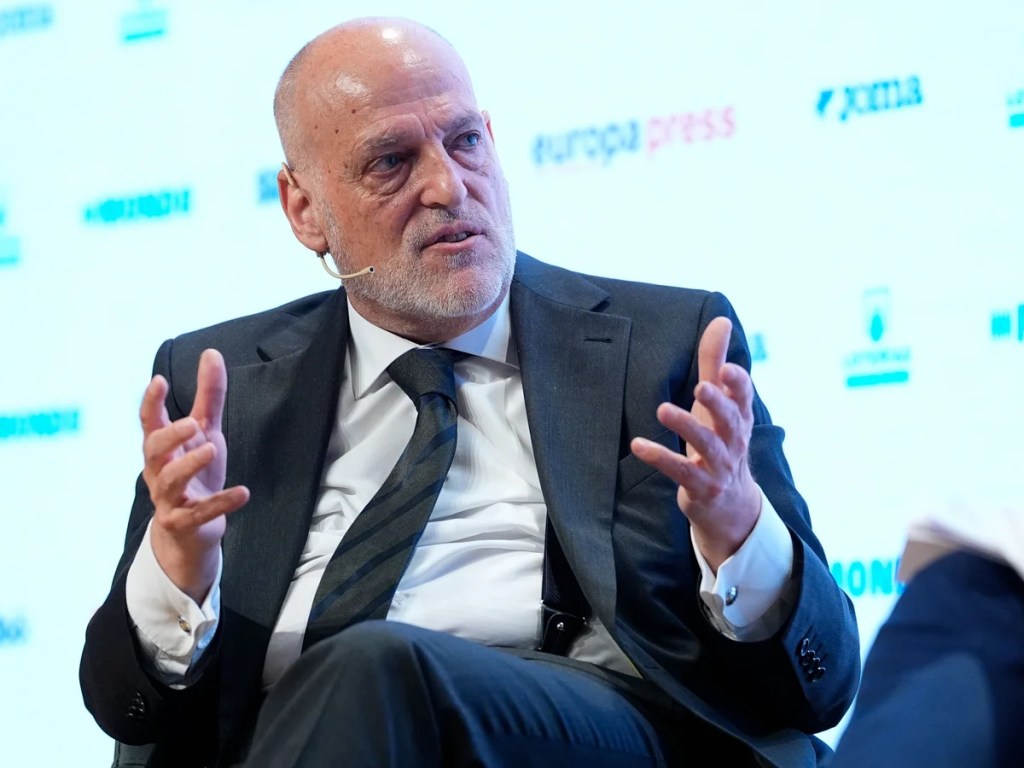
Tebas’ four previous attempts include Girona vs Barcelona in January 2019, Villarreal vs Atletico Madrid in February 2020 and Barcelona vs Atletico in December 2024. However, the most recent attempt was by far the closest call — that is before LaLiga cancelled it.
There has been speculation as to whether Tebas will find another opportunity to push for a LaLiga game being played in the United States. In the statement published by LaLiga, the league said it “will continue, as always, to work to bring Spanish soccer to every corner of the world, promoting an open, modern and competitive vision that benefits clubs, players, and fans alike.”
There is a very possible, maybe even inevitable, reality where Tebas’ United States project is played out. With the growing commercialization of the sport, it is impossible to think that the LaLiga president will turn away from the opportunity of commodifying the Spanish league to one of the richest and untapped countries in the footballing market. However, it has become increasingly clear that, in order to do so, LaLiga will have to host open and transparent dialogues with the players and clubs about the game, which historically has not been the league’s, or Tebas’, strong suit.
 Welcome to FUT11
Leave a comment